[CEO Insight] Pushing Shopping Carts in Pharmacies: The Megawarehouse Shift Reshaping K-Beauty Retail
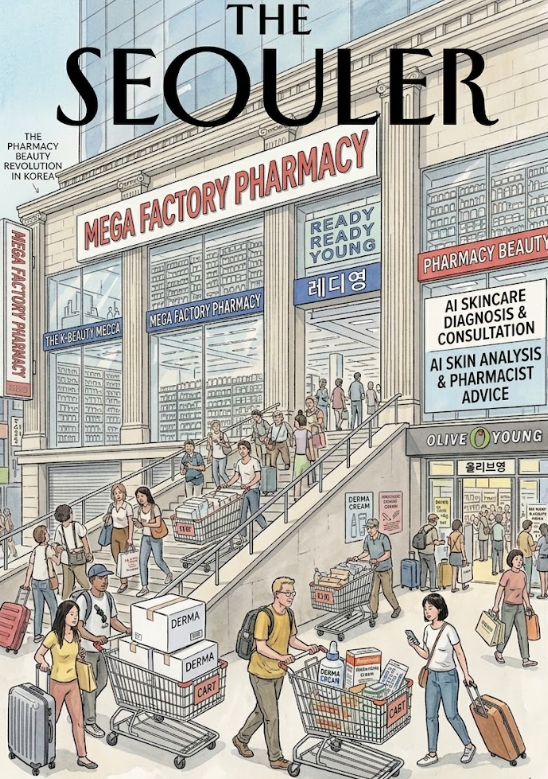
[Editorial] Pushing Shopping Carts in Pharmacies: The Megawarehouse Shift Reshaping K-Beauty Retail
For over a decade, CJ Olive Young has exercised near-monopolistic dominance over South Korea’s Health & Beauty (H&B) landscape. Today, that fortress faces structural disruption. Consumer traffic is migrating from trend-driven, cosmetic-heavy storefronts toward warehouse-style megapharmacies and specialized pharmacy-beauty chains anchored in clinical credibility.
Across key commercial hubs like Hongdae and Myeongdong, locations such as Ready Young Pharmacy draw steady queues of international travelers and domestic Gen Z/Millennial shoppers. Customers use in-store AI diagnostic stations to evaluate epidermal barrier health, then receive licensed consultations for high-potency dermacosmetics and over-the-counter (OTC) active ointments. Simultaneously, suburban warehouse powerhouses like Mega Factory Pharmacy—spanning hundreds of square meters inside hypermarkets—enable shoppers to navigate wide aisles with full-sized carts, purchasing functional supplements and clinical skincare in bulk.
Three core drivers underpin this retail transition. First is the radical rise of hyper-functional ingredient purism; consumers actively bypass diluted commercial formulations in favor of high-purity tranexamic acid, dexpanthenol, niacinamide, and post-procedure barrier creams. Second is the emergence of warehouse-scale retail dynamics, blending the wholesale pricing advantages of traditional dispensary districts with modern mass-merchandising convenience. Third is the explosive inbound medical-tourism surge, where foreign visitors treat Korean clinical pharmacies as mandatory lifestyle destinations.
While conventional H&B giants attempt to defend market share through premiumized derma sub-brands, they run into immutable regulatory boundaries. The pharmacy sector retains an exclusive license to retail OTC drug treatments and deliver verified pharmaceutical counseling—an structural advantage that digital H&B stores cannot replicate.
Enjoyed this article?
Subscribe to CEO Daily Brief and get core insights into the South Korean market delivered to your inbox every morning.
Comments 0
No comments yet. Be the first to share your thoughts!