CEO Daily BriefK-CULTURE
K-CULTURE

[Editorial] The Archetype of "Great Leadership" Koreans Crave
By Editor-in-Chief|Published: July 11, 2026 at 08:40 AM
Article main

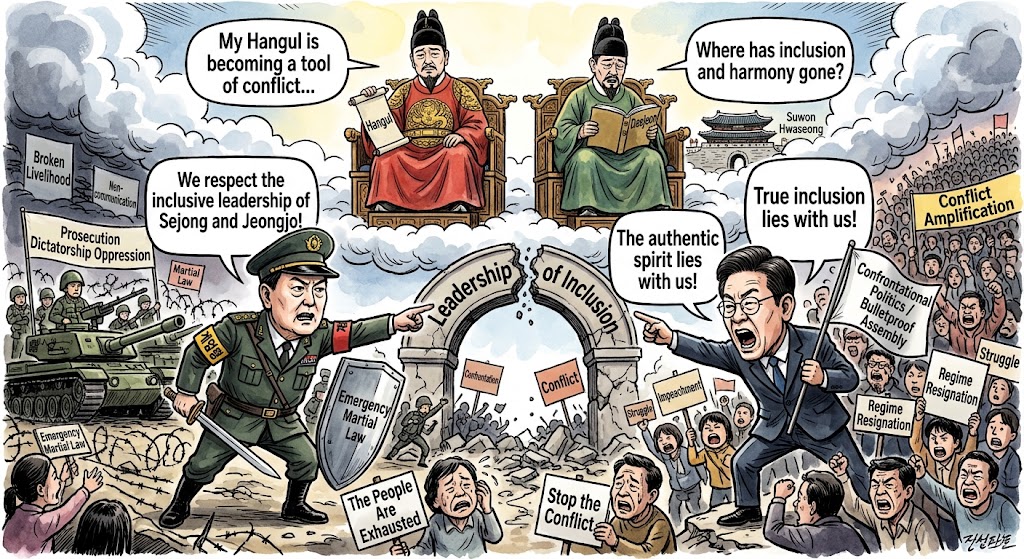
When asked to name the most respected figures in their history, Koreans invariably point to two monarchs: King Sejong the Great (r. 1418–1450) of the early Joseon Dynasty and King Jeongjo the Great (r. 1776–1800) of the late Joseon Dynasty. Although they faced different historical contexts and challenges, these two kings perfectly embodied the essence of what Koreans consider ideal leadership. For foreign observers seeking to understand the core of Korean leadership expectations, looking into the governing philosophies of these absolute monarchs—who were deeply connected to the lives of their people—is essential. The core of their leadership can be summarized as 'listening and empathy', 'systemic innovation and talent cultivation', and 'integration and self-reliance'.

First is the leadership of empathy and listening, reaching out to the most marginalized voices. Despite his extraordinary intellect, King Sejong often humbled himself before his officials, saying, "I do not know well," and sought their opinions; he even skipped meals out of heartbreak when witnessing the suffering of farmers during a severe drought. His creation of Hangeul (the Korean alphabet) to resolve the fundamental grievances of commoners who could not read is the ultimate crystallization of this empathy. King Jeongjo, too, refused to be confined within the high walls of the palace. During his reign, he undertook 66 royal processions, directly stepping into the lives of the people. He actively permitted the Gyeokjaeng (striking a gong or drum to appeal directly to the king) and Sangeon (written petitions) systems along the procession routes, demonstrating his mastery of on-site communication and grievance resolution.

Second is the leadership of systemic innovation and talent management, pushing through the resistance of vested interests. Both kings established academic research institutions that functioned as royal "think tanks" to revamp state affairs. Sejong utilized the Jiphyeonjeon (Hall of Worthies) to recruit capable individuals regardless of background, showing an inclusive leadership that deeply trusted his officials once tasked with a project. Similarly, Jeongjo elevated the Gyujanggak (Royal Library) to a core state institution, directly retraining and promoting young, talented officials. Notably, during the construction of the new city, Hwaseong Fortress, Jeongjo broke the long-standing convention of forced conscription and paid fair wages to laborers, realizing a highly innovative economic and labor policy for his time.

Third is the leadership of integration and self-strengthening, healing extreme conflicts while securing powerful driving forces. Sejong built a strong foundation for national defense and diplomacy through keen assessments of neighboring states, while internally refining the state system through relentless debate and compromise. Jeongjo, despite the horrific childhood trauma of his father (Crown Prince Sado) being locked in a rice chest to die, chose to inherit the Tangpyeong (policy of impartiality), embracing even his political opponents instead of seeking blind revenge. However, he did not settle for unconditional compromise; he established the elite royal guard, Jangyongyeong, deploying them in Hwaseong and the capital to secure a strong foundation of self-reliance, free from the influence of existing politically-aligned military factions.

Ultimately, the reason Koreans revere Sejong and Jeongjo as the greatest leaders is not because they were conquerors who expanded territories or iron-fisted dictators with absolute power. The ideal leader Koreans desire is a combination of a "warm parent" who does not succumb to a sense of privilege but can shed tears for the pain of ordinary people, and a "brilliant teacher" who pierces through the contradictions of the times to build practical systems.

Even today, whenever Korean society faces a crisis, it summons the legacies of these two great kings. Sejong and Jeongjo—who listened in the field rather than indulging in desk-bound theories, who broke down the walls of vested interests beyond division, and who meticulously designed the future—represent the deeply rooted, democratic, and humanitarian yardstick of leadership that the Korean people expect from their modern leaders.

Enjoyed this article?

Subscribe to CEO Daily Brief and get core insights into the South Korean market delivered to your inbox every morning.

Comments 0

No comments yet. Be the first to share your thoughts!

[Editorial] The Archetype of "Great Leadership" Koreans Crave | CEO Daily Brief