Getting Sick in Korea? What Foreigners MUST Know About Korean Pharmacies
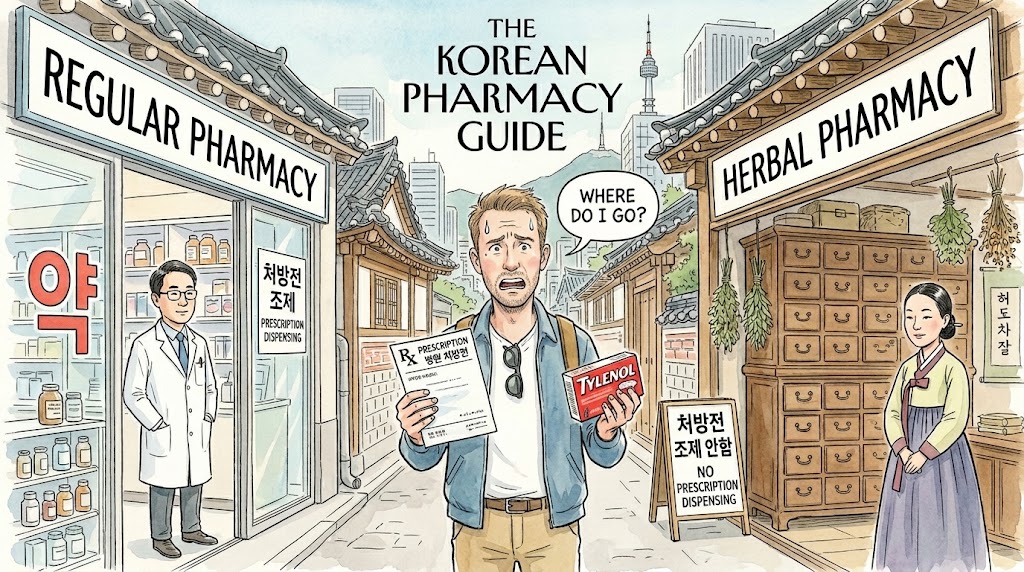
Key Differences at a Glance
| Category | Regular Pharmacy | Herbal Pharmacy |
|---|---|---|
| License Required | Licensed Pharmacist | Licensed Herbal Pharmacist |
| University Major | College of Pharmacy (Dept. of Pharmacy) | College of Pharmacy (Dept. of Herbal Pharmacy) |
| Prescription Dispensing | Prescriptions from regular clinics/hospitals (Western drugs) | Prescriptions from traditional Korean medicine clinics (Herbal drugs) |
| Direct Dispensing (No Rx) | Not allowed (Doctor's prescription required) | Allowed within 100 traditional formulas designated by the Ministry of Health and Welfare |
| Main Products Handled | Prescription drugs, Over-The-Counter (OTC) drugs, quasi-drugs, etc. | Herbal medicines, herbal preparations, and OTC drugs (under current law) |
1. Differences in License and Major
A Pharmacist (Regular Pharmacy) is a professional who has graduated from a college of pharmacy and passed the national pharmacist licensing exam. They specialize in pharmacology and chemically synthesized medicines based on Western medicine.
On the other hand, an Herbal Pharmacist (Herbal Pharmacy) is a professional who has graduated from the department of herbal pharmacy and passed the national herbal pharmacist licensing exam. They specialize in herbal ingredients and preparations based on traditional Korean medicine.
2. Prescription and Dispensing Authority
Regular pharmacies dispense medicine based on prescriptions issued by general clinics or hospitals (e.g., internal medicine, pediatrics). They cannot dispense prescription drugs without a doctor's order.
The most distinctive feature of an herbal pharmacy is that they can directly prepare and dispense herbal medicine after consulting with a consumer, without a doctor's prescription, limited to 100 traditional formulas recorded in recognized ancient medical texts (such as Dongui Bogam) by the Ministry of Health and Welfare.
Enjoyed this article?
Subscribe to CEO Daily Brief and get core insights into the South Korean market delivered to your inbox every morning.
Comments 0
No comments yet. Be the first to share your thoughts!